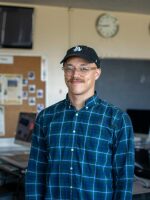
Chico resident Mari Jaques Tineo rushed to wake her sleeping mother early Saturday as news broke that the U.S. military captured Venezuelan President Nicolás Maduro.
“I woke her up, like, at 2 a.m.,” Tineo said. “She was like, ‘What are you talking about?’ I'm like, ‘They got him.’ She’s like, ‘No.’ And then she started to shake, all emotional.”
Both were thrilled to hear that Maduro had been arrested.
Tineo grew up in Venezuela. She says her life there was shaped by years of corruption and dictatorship under Maduro and his predecessor, Hugo Chávez.
“Honestly, I'm very happy. I'm very grateful with what's going on because like I said, we're finally seeing this little light at the end of the tunnel. Tineo said. “Because I never thought that I was going to be alive to live this moment.”
Oil, power and the politics behind the operation
Some warn the moment could come with serious consequences.
Steve Lewis, a history professor at Chico State who focuses on Latin America, said though not surprising after weeks of U.S. aggression, the capture is ominous and dangerous.
“It's just hard to know how the Venezuelan military will react, how ordinary Venezuelans – who were most of them were supportive of Chávez 15 years ago,” Lewis said. “[They’re] going to put up with a kind of colonial status? We'll see.”
President Donald Trump took advantage of the situation, Lewis said, since Maduro was unpopular and an easy target.
“He also happens to be controlling a country that has the largest proven oil reserves in the world, right?, Lewis said. “So, Venezuela is still rich in oil, but due to sanctions and due to corruption and other things, the Venezuelan people have not been able to derive any benefits from it.”
Those oil reserves are central to the conflict and to concerns about U.S. involvement there.
In a close vote Thursday, the Senate advanced a measure that could force U.S. troops out of Venezuela unless Congress signs off.
California Sen. Adam Schiff voted to move the resolution forward. He said instead of curbing the flow of drugs, Trump’s real goal was seizing the country’s oil, he said during floor remarks.
Today's vote to advance our resolution to block further military action in Venezuela was significant.
— Adam Schiff (@SenAdamSchiff) January 9, 2026
We'll now have a full debate on the Senate floor over the President's use of U.S. military forces, and a mission that seems to be far more about oil revenues than drugs. pic.twitter.com/E8HDcaetif
“An administration that had promised to end foreign wars has begun a new one,” Schiff said. “A president who had decried the use of force for regime change or to engage in nation building, has just committed our country to both.”
Schiff added that the Trump administration misled the public about its intentions in Venezuela. And he said the president should focus on Americans struggling to make ends meet at home.
More than politics
Back in Chico, Tineo said people have been reaching out to her to offer sympathy, but she said those reactions often miss how Venezuelans themselves are viewing the moment.
“Are they Venezuelan? Do they know exactly what being Venezuelan and living in Venezuela means?” Tineo said. "I don't think so. They haven't. They didn't have to go through what we've been through all these 27 years."
Trump said the U.S. could be in Venezuela for years to come. Tineo said she doesn’t fully agree with the president’s methods and remains hopeful that the U.S. won’t take over the country.
She supports Venezuela's opposition party, whose leader is widely believed to have won the last presidential election, despite Maduro’s party staying in power.