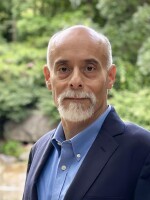
AILSA CHANG, HOST:
The U.S. has long criticized North Korea for restricting religious freedom. This has generally not been a problem with South Korea. But as NPR's Anthony Kuhn reports from Busan, the Trump administration has raised concerns about one particular case.
UNIDENTIFIED GROUP: (Singing, inaudible).
ANTHONY KUHN, BYLINE: It's Sunday at the Presbyterian Segero Church in Busan. Performers are putting on a musical adaptation of John Bunyan's 17th century Christian allegory, "Pilgrim's Progress." The church's pastor is 64-year-old Son Hyun-bo. He grew up in poverty and built a rural chapel with about 20 followers into a congregation that claim some 4,000 weekly attendees.
SON HYUN-BO: (Through interpreter) I have dedicated my entire life to evangelism and helping my neighbors, never once involving myself in politics. But I felt compelled to step forward because the government was acting so unjustly.
(SOUNDBITE OF ARCHIVED RECORDING)
UNIDENTIFIED PERSON: (Shouting in Korean).
KUHN: Son rose to prominence by organizing protests where he gave fiery speeches against liberal social policies and against the impeachment of former President Yoon Suk Yeol, who briefly declared martial law in 2024. After President Lee Jae Myung took office, his administration began investigating religious groups' alleged interference in politics. This week, a Seoul court sentenced the head of the Unification Church to two years in jail for bribing South Korea's former first lady. Pastor Son considers such groups heretical, but he says that South Korea's government should leave them alone.
SON: (Through interpreter) Ordinary Christians usually view such groups with hostility. But because matters such as religious freedom and political issues are discussed within their own groups, I do not think it is right to restrict them by applying the standards of the law.
KUHN: South Korea's constitution guarantees freedom of religion and separation of church and state. The government says it's targeting political interference, not any religious group or political party. South Korean law bars religious leaders from using their offices for electioneering. Son was investigated for using his position to campaign for a candidate for education superintendent. Son says many Korean and American pastors defended him.
SON: (Through interpreter) The decisive moment came when I met Charlie Kirk five days before he was killed. We discussed the situation, and he promised to raise awareness about it once he returned to the states. However, I was arrested the very next day.
KUHN: Son was detained for nearly five months and then released just days after Vice President JD Vance raised his case with South Korea's prime minister. Son says his lawyers believe Vance's intervention helped his case, although there's no proof of it. Secretary of State Marco Rubio mentioned South Korea at Charlie Kirk's memorial service last September.
(SOUNDBITE OF ARCHIVED RECORDING)
MARCO RUBIO: One of the last messages I had with him was just a few days before his passing, where he wrote me from overseas. I'm in South Korea. I have many concerns I want to share with you when I get back.
KUHN: Son Hyun-bo met with President Trump at the White House in July. Suh Myung-Sahm teaches religious studies at Sogang University in Seoul. He says Son Hyun-bo stands out because of his connections to President Trump's allies.
SUH MYUNG-SAHM: American government under Trump administration is paying disproportionate attention to the Son Hyun-bo case. I don't think they're very much invested in these cases of Unification Church or the Shincheonji, but they are very interested in the case of Son Hyun-bo.
KUHN: Despite the interest in Son's case, the State Department has not put out its annual report on international religious freedom for 2024 or 2025 or filled the position of ambassador at large for International Religious Freedom. The State Department and the White House either declined or didn't respond to NPR's requests for interviews.
UNIDENTIFIED GROUP: (Singing, inaudible).
KUHN: Meanwhile, Pastor Son's Church appears to be thriving, but one project remains unfinished - to get official accreditation for his Christian academy named after South Korea's first president Syngman Rhee. Rhee envisioned Christianity as the moral foundation of the country. Again, Sogang University's Suh Myung-Sahm.
SUH: This is kind of a Korean version of Christian nationalism. And then Son Hyun-bo and many other figures who are involved in this movement, they want to bring back the good old days, you know, make Korea great again.
KUHN: Some analysts believe that the U.S.-South Korea alliance is under stress from issues including President Trump's outreach to North Korea, Iran and trade. The issue of religious freedom could join that list, especially if U.S. leaders' comments translate into official policy.
Anthony Kuhn, NPR News, Busan. Transcript provided by NPR, Copyright NPR.
NPR transcripts are created on a rush deadline by an NPR contractor. This text may not be in its final form and may be updated or revised in the future. Accuracy and availability may vary. The authoritative record of NPR’s programming is the audio record.