EYDER PERALTA, HOST:
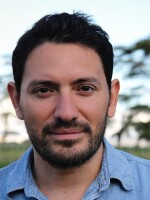
The U.S.' deadly attacks on boats came into sharp focus this week after a group of bipartisan lawmakers raised the question of whether one of those strikes constituted a war crime. This came after The Washington Post reported that on September 2, the U.S. conducted two strikes on a boat the U.S. alleges was ferrying drugs, with the second strike intended to kill survivors. That strike was only one of the 23 the Pentagon has publicly acknowledged. By their count, at least 87 have been killed in the Caribbean Sea and Pacific Ocean since September, including another strike on Thursday that killed four. Luis Moreno Ocampo was the first prosecutor at the International Criminal Court, and he joins us now. Thank you for being here.
LUIS MORENO OCAMPO: My pleasure.
PERALTA: Luis, is targeting these boats with deliberate lethality a war crime?
MORENO OCAMPO: Well, it is, but it's a minor problem.
PERALTA: What do you mean by that?
MORENO OCAMPO: The real issue is the strategy to shoot boats in the Caribbean. That's the real problem. Why? First, it covered the problem. The drug problem in the U.S. is not produced by these drug cartels. Cocaine is just 7% of the consumption of illegal drugs - nothing. And the real killer was the opioids. The opioids crisis was produced by American lab with nobody drug dealers. So this campaign obscured the problem. In fact, you were talking about Medicare. The reduction of people dying for opioids is - but - it's because of the Medicare - the new medical system you have. So that's why the shooting people in the Caribbean is covering up the problem of use of drugs in the U.S. That's the first problem. The second problem is shooting some drug traffickers in the Caribbean will not reduce the problem.
PERALTA: Yeah.
MORENO OCAMPO: Because...
PERALTA: So sticking with the Trump...
MORENO OCAMPO: ...Drug traffickers are replaced.
PERALTA: Yeah. So sticking with...
MORENO OCAMPO: New boats.
PERALTA: ...The Trump administration's definition of what's happening, that this is part of their war against what they call, quote, "narcoterrorists," I mean, are there norms that would govern such a conflict?
MORENO OCAMPO: Well, the point he - President Trump is extending the concept of parties participating in hostilities. To have a war, you need a state or a nonstate actor taking part in hostilities against your country. And drug dealers are not engaged in hostilities against the U.S. They are just smuggling drugs. They are criminals, but not warriors. And that's something any legal expert in the U.S. would say.
PERALTA: And what recourses do other countries have seeing that their nationals are being targeted in this way?
MORENO OCAMPO: Well, the problem is that the global system is - has not a central authority. So power is important, and the U.S. has the biggest army in the world. So in some way, people voting for Trump, and Trump is defining a policy, and for the other countries, it's complicated to stop. But the - this could be clearly crimes, war crimes and crimes against humanity. And they could be prosecuted by Venezuela or Colombia if the killing happened in the international sea...
PERALTA: I see.
MORENO OCAMPO: ...Because both countries are also part of the International Criminal Court, eventually, the International Criminal Court could do it. But most importantly, the U.S. has jurisdiction. Probably, this administration will not investigate these crimes, but they could investigate the next administration. And that's why in the U.S. Army people has difficulties to follow these instructions because they are trained and they know this is illegal.
PERALTA: So there are many reports and allegations of war crimes right now against both Russia and Ukraine in their war against Israel and in Lebanon and Gaza, against both the military and the paramilitary Rapid Support Forces in Sudan. Is international law any kind of deterrent?
MORENO OCAMPO: Well, the problem is the decision of the judges should be supported by states. And therefore, we have two states are doing two things at the same time. Some of them are doing wars. Some of them are trying to do justice. And both models are coexisting. Yes, you are making wars, but you are not winning the war in Ukraine. You lost the war in Afghanistan. So war is not working. Justice is working more or less.
PERALTA: Is international law failing, do you think? We've got 30 seconds.
MORENO OCAMPO: Prime Minister Netanyahu, President Putin were indicted. At least they can not travel. It's a limit. So we need to have clarity how to improve peace and security in the world.
PERALTA: We'll have to leave it there. That's Luis Moreno Ocampo, the founding prosecutor at the International Criminal Court. Luis, thank you for being with us.
MORENO OCAMPO: Thank you very much. Transcript provided by NPR, Copyright NPR.
NPR transcripts are created on a rush deadline by an NPR contractor. This text may not be in its final form and may be updated or revised in the future. Accuracy and availability may vary. The authoritative record of NPR’s programming is the audio record.